 AI-generated illustration
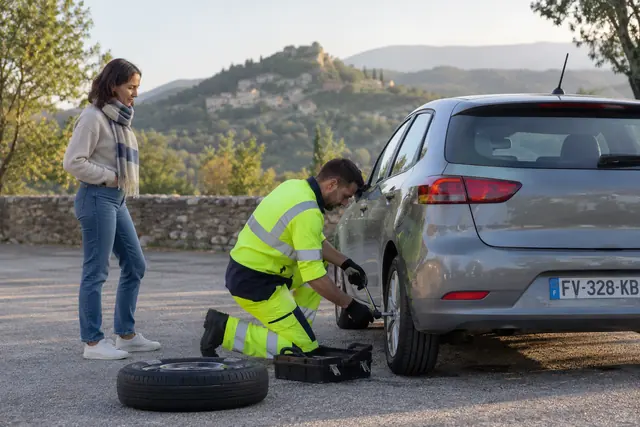
Motorway breakdown in France: protect people before repairing
Find a safe position, contact the right operator and prepare the information needed for assistance.
Read the guidePrepare your licence, documents, toll payments and first journey in France. Official references and clear practical checks.

Updated: 21 November 2026 · Lire ce guide en français
Your right to drive depends on the country that issued your licence and your situation in France. An EU/EEA licence and a non-European licence for a short stay follow different conditions. Moving to France requires a separate check.
Check the issuing country, vehicle categories, restrictions and expiry date. Distinguish a short stay, a period of study and normal residence. Permission to drive during a visit does not establish continued validity after moving to France. Use the official guidance for your circumstances. Your passport nationality alone does not identify the country that issued your driving licence.
A valid EU/EEA licence is recognised in France subject to the applicable conditions. For a short stay with a non-European licence, check its validity and the requirement for French-language documentation, an official translation or an international driving permit. An international permit accompanies the original licence. Carry the original document and check the official guidance linked below before travelling.
International students can drive during their studies if they meet the French conditions. Check your student residence permit or job-seeker or business-creator residence card, where your licence was issued and whether you need an official translation. French nationals, including dual nationals, should check the recognition and exchange rules for people settling in France. See the Service Public guidance below for eligibility and what to do when your residence status changes.
If your EU/EEA licence was exchanged from a licence issued outside the EU/EEA, recognition can depend on the original issuing country and whether you become normally resident in France. Do not rely only on the EU format of the document. The official European-licence guidance describes this special case and the exchange requirements.
A UK licence issued before 2021 is generally recognised while it remains valid. Certain situations require exchange, including expiry. For a UK licence issued in 2021 or later, check the rules for exchanging a non-EU/EEA licence when you become resident. The exchange guide in French links to the official procedure and explains the deadline and fee.
The rental company may set contractual requirements for age, experience, payment and documents. Ask what will be required at collection and whether you may cross a border. Check the vehicle, its controls and how toll payments are handled. A rental administration fee and the motorway toll are separate costs. Keep a written record of the arrangements.
Drive on the right and read signs and priorities rather than relying on habits from home. Check speed limits, lighting, child restraints and winter equipment for your destination. Environmental access restrictions require a local check: a Crit’Air sticker is a vehicle classification, not permission to enter every zone. Choose a straightforward first stage and places where you can stop safely.
A signed zone de rencontre is a shared area with a 20 km/h limit and priority for pedestrians on the carriageway. A pedestrian area has its own access restrictions. Plan parking before arriving in a historic centre and use the local authority’s current information for environmental zones. A navigation instruction does not authorise a turn, an entry or a manoeuvre prohibited by signs.
Ask the rental company whether a toll tag or automatic payment covers your journey and registration plate. For a chargeable free-flow crossing that has not been paid automatically, pay the road operator within 72 hours. Use the signs and the operator’s official website to identify the correct service. Keep payment evidence and distinguish the motorway charge from a rental administration fee.
For the general French rule, maintain a gap corresponding to at least two seconds of travel and enough space to avoid a collision if the vehicle ahead suddenly slows or stops. At a constant 90 km/h, two seconds represent 50 metres: 90 ÷ 3.6 × 2. This is a following gap, not a stopping distance. Particular vehicle or road rules can require a greater gap.
The following-distance calculator (French) explains the conversion. Use it while stopped, and adapt your driving to the actual conditions.
Check the rules again for your new situation: issuing country, residence, validity and any exchange requirement. Note the dates of residence documents or your move, then consult the matching procedure.
What to avoid. Conditions that apply to a visit do not guarantee long-term recognition after moving.
Keep the original driving licence and the required vehicle documents accessible. France Identité’s digital driving licence complements the physical document; do not assume that a photograph, a screenshot or a digital document will meet every rental or overseas requirement. If the vehicle breaks down, protect occupants first and contact the correct assistance service. Use 112 for an emergency and provide the road, direction and a clear location.
No. It accompanies a valid national licence where required. Check the requirements for your own documents.
Not necessarily. Normal residence can change the conditions and require administrative steps. Consult the official page that matches your status.
Confirm coverage and activation with the company. Identify the operator for each free-flow journey and retain evidence of payment.
Exchange depends on the issuing country, your status and the applicable conditions and deadlines. Check the official exchange guidance before relying on continued recognition.
Check the conditions and exceptions in the official guidance before making arrangements. Some linked services and the other guides on this portal are in French.
AI-generated illustrationFind a safe position, contact the right operator and prepare the information needed for assistance.
Read the guide Illustration
Check the season, tyre markings, local orders and compatibility before a mountain journey.
Read the guide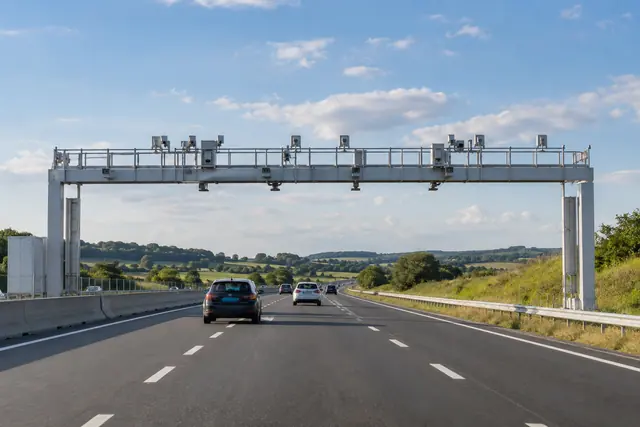 AI-generated illustration
Recognise toll gantries, use the official payment channel and avoid fraudulent payment links.
Read the guide AI-generated illustration
Vehicle category, deposit, insurance and inspections: check the conditions that make a rental usable.
Read the guide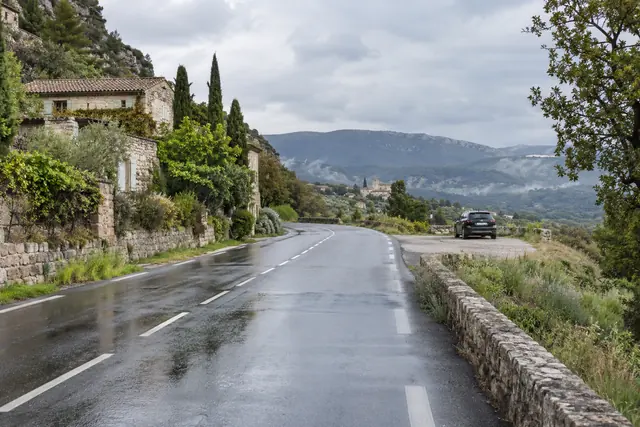 AI-generated illustration
Adjust speed, spacing and controls when the road is wet.
Read the guide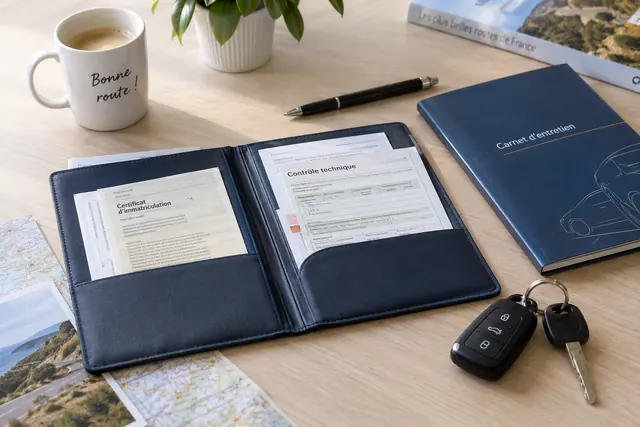 AI-generated illustration
Licence, registration, insurance and temporary evidence: identify what is required and what remains useful.
Read the guideBrowse all 18 translated guides