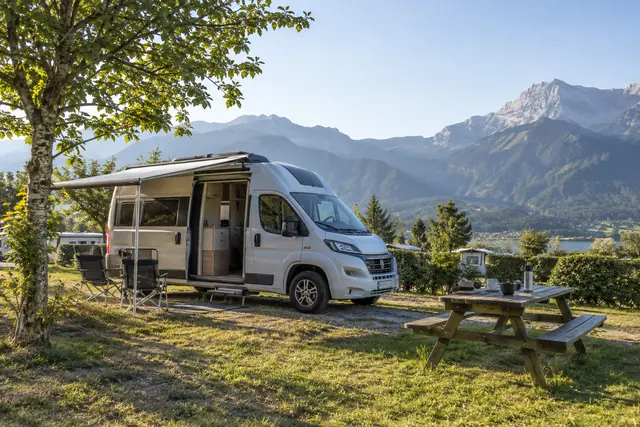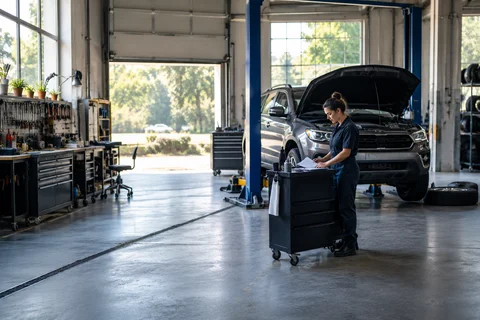

Compare total cost and conditions for your driver, itinerary and return time. Photograph the vehicle at collection and return, while also keeping the inspection agreed with the rental company.
Compare an offer you can actually use
Check category, seating, boot space, transmission and minimum-age or licence-experience conditions. The illustrated model is not necessarily the one supplied. Add the useful options and stated fees, and check mileage allowances and fuel or charging arrangements.
Distinguish the deposit from insurance
The blocked deposit, excess and price paid are different amounts. Read cover, exclusions and limits, particularly for tyres, glass, keys and assistance. Check the accepted payment method and available capacity; card insurance must be checked under its own conditions.
Collect the vehicle without rushing
Have existing defects recorded, including the interior and energy level, on the inspection document. Keep dated photos and a copy of that document. Before driving, adjust the seat and mirrors and locate the lights, demisting controls, parking brake and transmission controls.
Prepare the return
Plan the filling station or charger, time and exact return location. Ask how condition is recorded when the office is closed. Keep the receipt and evidence of the agreed energy level. For disputed charges, request details, supporting evidence and a comparison of the collection and return inspections.
Booking a specific model or a category
The rental company must state whether you are booking a specific model or a category that can result in a similar vehicle. Check the characteristics promised in your booking: an automatic transmission or a contracted number of doors should not disappear behind an ‘equivalent’ label. If the offered car differs, clarify the solution before signing the collection report.
Reference: DGCCRF — réglementation de la location de véhicule ↗
Your reserved car is unavailable: what can you request?
Ask for a written proposal before accepting a replacement. Conso.gouv states that an equivalent or higher category should be provided without an extra charge; a lower category should use its corresponding price. You may refuse a vehicle that fails agreed requirements, such as automatic transmission or the number of doors, and request cancellation and reimbursement. Keep the reservation and replacement offer: a higher category does not necessarily meet accessibility or size requirements.
Reference: Conso.gouv — véhicule de location indisponible ou non conforme ↗
Free-flow tolls: avoid paying twice
Ask whether the rental company pays the toll, charges a handling fee and provides a receipt. If you pay directly, use the plate and the exact collection and return times. A chargeable crossing not paid automatically must be paid to the relevant operator within 72 hours.
Avoid disagreements about returning a rental
| What to distinguish | Practical check |
|---|---|
| Hours | Ask in writing how an out-of-hours return is recorded. |
| Energy | Compare collection and return levels according to the contract. |
| Damage | Keep condition-report reservations, photos and correspondence as distinct records. |
Practical reference
| Stage | Useful action | Watch out for |
|---|---|---|
| Booking | Compare excess, security deposit, energy policy and declared drivers. | The starting price does not describe every possible cost. |
| Collection | Read the condition report and have visible damage recorded. | Personal photos do not replace reporting a disagreement to the rental company. |
| Return | Check location, time, energy level and proof of return. | A key box may leave a delay before the vehicle is inspected. |
Compare practical conditions
| Item or situation | Useful reference | Check or limit |
|---|---|---|
| Base price | Duration and included mileage | Return time and overruns |
| Insurance | Cover, exclusions and excess | Damage procedure |
| Energy | Required return level | Fuel or charging evidence |
| Tolls and options | Tag, child seat, additional driver | Separate administration and invoices |
There is a scratch on the vehicle before you leave.
Have it recorded on the inspection report, gather useful evidence and retain a copy. Check fuel or charge level, equipment, excess and return rules before leaving the office.
What to avoid. A photograph without reporting the defect or keeping the document may not resolve a disagreement.
Practical checks
Tick the checks you have completed. Your progress stays on this page while you read.
Ticking these checks helps you prepare; it does not certify your vehicle, driving entitlement or fitness to drive.
Common questions
Does the advertised photo guarantee the model?
Not necessarily. Check the category and characteristics guaranteed in the booking.
Is the deposit the rental price?
No. It is a contractual security arrangement; check its amount and release conditions.
Can I cross a border?
Check permission, insurance and any fees before leaving.
Can a new driver rent any car?
Check the operator’s minimum age, licence holding period and vehicle categories. A French law of 18 August 2026 also provides for a restriction on short-term rental of certain powerful vehicles during the probationary period. Service Public says a separate legal text must set the power threshold; check the rules applying when you book.
Official references
This English translation concerns rules and services in France. It does not make them applicable in another country. Local signs, official instructions, vehicle manuals and contracts may specify your situation. Linked references and service pages are in French.
Prepare your next step
The portal’s tools and administrative service pages are in French. Use them while stationary and refer to the official service for your own case.
Open the matching tool or resource (French)